Members


Research and Insights

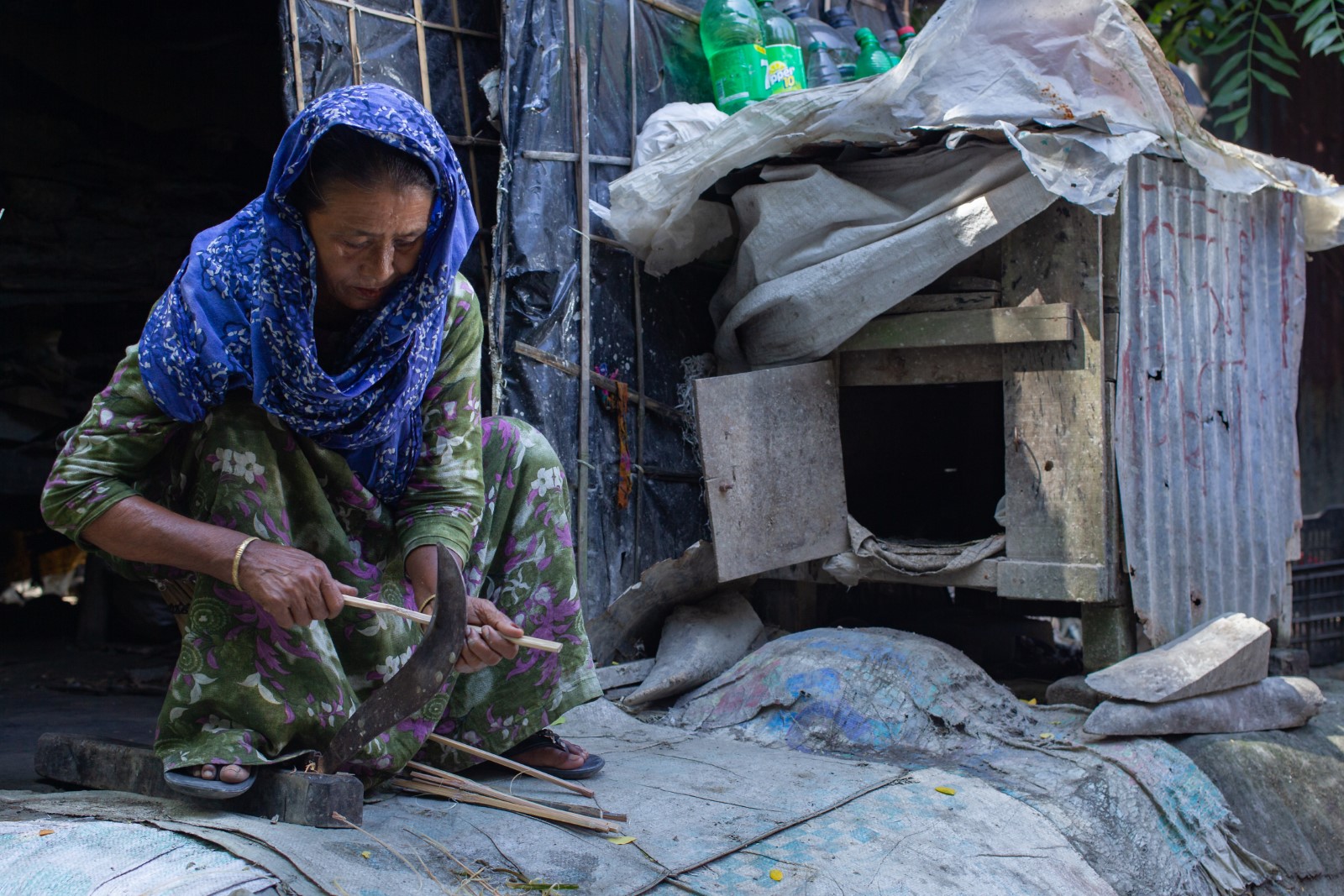
Hosneara worked in a garment factory for a long time, and her family depended on her income. Due to carrying heavy loads regularly at the factory over many years, she developed a severe physical problem in her shoulder. The excessive pressure caused a shoulder bone to displace, pressing against the surrounding nerves and blood vessels. On her doctor's advice, she was no longer able to perform heavy physica
Keywords:

Fair Trade is fundamentally about more than producing and selling products at a fair price. It is also about dignity, rights, equality, decent working conditions, and creating opportunities for producers and workers to participate meaningfully in economic and social life. For the thousands of women who contribute to Bangladesh’s handicraft sector, these principles are particularly important.
Keywords:

Anika Akter, a 22-year-old entrepreneur from Chand Uddyan, Mohammadpur, Dhaka, lives with her mother, Rasheda Begum, and her younger sister, Anisha. While pursuing her second year of undergraduate studies, Anika dreamed of creating something unique that would allow her to become financially independent. Inspired by her creativity, she ventured into making handcrafted wooden jewelry.
Keywords:

Unnayan Sangha (US) organized a daylong Advanced Advocacy Skills Development Training and Community Organizing Orientation on 16 August, 2026 at DTRC- Unnayan Sangha (US), Jamalpur, Bangladesh, with the support of HomeNet South Asia (HNSA) and in collaboration with Labour at Informal Economy (LIEs). The event brought together 30 Home-Based Workers and focused on strengthening their advanced advocacy, leadership, communication, and community organizing skills to promote workers’ rights and dignity. As a key outcome of the training, the Jamalpur Home-Based Workers Network formed a seven-member Ad Hoc Committee to lead collective advocacy and coordination. The committee will work to promote fair prices, social and workplace security, a safe and friendly working environment, capital collection from the Financial Institutions, and dignity for Home-Based Workers, while engaging relevant stakeholders to advance and protect their rights and interests. The Ad Hoc committee list is given below:
Keywords:

Smriti Akter Sumi, a 24-year-old member of the Mirpur Pallabi Women's Cooperative, is part of a remarkable group of 300 women within her organisation, dedicated to preserving their cultural heritage while forging new paths for the future. The cooperative specialises in traditional handicrafts, including weaving clothes and sarees, with skills passed down through generations. Beyond its business operations, the cooperative serves as a space where women unite, support each other, and grow personally and professionally. Each handcrafted item they create represents the resilience and strength of their community.
Their journey toward empowerment began in 2008 with a partnership with the OSHE Foundation/ LIE. This organisation provided essential training not only to enhance their craft but also to equip them to face gender-based challenges. These sessions helped the women understand their rights, enabling them to protect one another and create a safe environment where they could thrive as artisans and individuals.
A pivotal moment came in 2021 when Smriti was offered the opportunity to participate in a digital skills training session organised by HNSA. This training was conducted via Zoom and opened up a world of possibilities that had previously seemed out of reach. The idea of selling handmade products online had always been a distant dream. Still, with the newfound skills, Smriti and her peers learned to navigate platforms like Facebook and Instagram, showcasing their work and expanding their reach beyond local markets.
Keywords:

Mehedi is a small factory owner from Ashulia, Savar, who takes subcontracted work from large factories and gets the work done by home-based workers, while also working himself. Around 40 home-based workers are connected to his factory, who earn their livelihoods by working from home on various stages of T-shirt production, sweater tagging, and button-related tasks. Before Eid, he received several important orders, which were extremely important for him to deliver within the scheduled time.
Keywords:

On 8 March 2026, Labour at Informal Economy (LIE), in collaboration with Bangladesh Free Trade Union Congress (BFTUC) and OSHE Foundation, organised a Women’s Day celebration program in Dhaka. It brought together women workers from various sectors to recognise their rights, contributions, and dignity, and discuss crucial issues such as Gender-Based Violence (GBV) and legal protections available for women. The event aimed to strengthen solidarity among women workers and encourage them to share knowledge with their communities.
Keywords:

During the global ‘16 Days of Activism’, HomeNet South Asia (HNSA) hosted a regional webinar titled “Bridging Voices: Home-Based Worker Realities and Policy Pathways to End Violence.” The event brought together policymakers, activists, and home-based workers (HBWs) from across South Asia to confront a bitter but often overlooked reality: millions of women who sustain local economies remain unprotected and vulnerable to violence. Despite the economic contributions they make, most women HBWs continue to work in a legal and regulatory blind spot. The main message of the webinar was clear – violence against HBWs is not only a gender issue, but a governance and policy failure that demands urgent action.
Keywords:

Hena Akhter Rupa, a 29-year-old grassroots leader from Hazaribagh, Dhaka, has been deeply involved in her community's struggles. Her mother was a central leader of the slum federation, and Rupa’s journey as a leader of home-based workers (HBWs) began when she became part of the Coalition of the Urban Poor (CUP) as an adolescent.
At 16, Rupa's education was cut short by an early marriage, a common occurrence in her community. However, her resolve to continue her education remained unwavering. Despite the challenges of being a young mother to two children, Rupa resumed her studies. She began working as a home-based worker, which allowed her to support her family financially while contributing to her community.
Keywords:

In the charming city of Sylhet, Bangladesh, lives a woman known to be soft-spoken yet doggedly determined. She is involved with her organisation, Labour at Informal Economy (LIE). As a leader of her group Swanirbhor Karmojibi Nari Unnayon Somiti, she helps women fight for recognition and fair wages through the labour market. Her name is Rashida Akhtar Nipa.
Rashida began her career as a community leader with a simple observation. On visiting Dhaka, she observed that women there received specialised training designed for their empowerment. This opportunity was far removed from what women in Sylhet are used to. Rashida saw the potential of such programs for improving women's lives and knew immediately that her community could benefit from such initiatives too.

In the heart of Pallabi, a new change is being brought about by an energetic, resilient 30-year-old woman named Farzana. Once an invisible figure in her community, she has become a respectable leader and mentor for the 130+ women in her group within her organisation. Indeed, her story is the best example of how training, skills development, and cooperative action can change lives.
Farzana joined the Pallabi Cooperative Society Cottage Industry Limited in 2008 and has actively empowered her community. Being a home-based worker, she has faced many of the challenges that other women face – they are discriminated against, paid in arrears, and have no voice to raise these issues within their society. However, with the proper support and training, she broke free from the conventional constraints and not only changed her own life but also helped build the lives of hundreds of other women fighting for themselves.
Keywords:

HomeNet South Asia (HNSA) recently organised an engaging regional webinar titled ‘Access to Markets’ on 29 April 2025, bringing together affiliate organisations from all across South Asia to discuss one of the most pressing challenges faced by home-based workers (HBWs): access to markets. Moderated by Ms. Monica Raina, the session was a reflection on some of the biggest obstacles and opportunities under this topic.

A 30-year-old home-based worker (HBW) from the Jatrabari cluster in Dhaka, Laiju Akter has transformed her life and the lives of countless others through her unwavering determination and leadership. Starting as a ball press worker in the garment accessories industry, Laiju's early life was filled with challenges. She dropped out of school in eighth grade, married young, and soon faced violence and abuse from her husband. Left as a single mother after her divorce, with a young daughter to care for, Laiju faced severe financial and social challenges. However, her story was just beginning.
Keywords:

In September 2019, with support from Comic Relief, HomeNet South Asia and WIEGO collaborated on the Power Up programme. It was designed to create a global movement of home-based workers by strengthening grassroot organisations and leaders, to enable women home-based workers to build increased recognition, representation and ultimately better livelihoods in Africa and South Asia. In South Asia the project focused on Bangladesh, India and Nepal.
Keywords:

The COVID-19 outbreak has impacted global garment supply chains causing brands and retailers to close shops and cancel orders from sourcing factories. This has resulted in mass layoffs and has had a devastating effect on the livelihoods of homeworkers – who form the lowest tiers of supply chains.
Keywords:

Keywords:

Keywords:


Report on Need Assessment on Livelihood Skills Developments and Technological Up gradation, Aug 2012
Keywords:

A half day city official workshop has been held in Dhaka, BIAM Centre on 4th June, 2012. City officials from different department of Dhaka City Corporation, Dhaka Water Supply and Sewerage Authority (DWASA), Dhaka Power Development Corporation (DPDC), NGOs, Trade Union representatives, Representatives from Homebased Workers were present in the workshop.
Keywords:

A three-day long nonresidential training workshop on organizing & leadership for the identified HBWs in Dhaka city was organized at Radda MCH Centre Mirpur, Dhaka, Bangladesh.
Keywords:

This study contributes to the development of understanding of supply chain with which the women homeworkers are involved. We have studied the homeworkers and their organizations in Dhaka city.
Keywords:

DSK has been implementing the project entitled ‘World Class Cities for All’ in partnership with HomeNet South Asia Trust since 2013. The major objectives of the project are to create organizing, awareness raising and capacity building to home based workers of Chittagong city.
Keywords:


The 'key issues' studies of urban poor homebased workers in South Asian countries (Bangladesh, Nepal and Pakistan) and Southeast Asian countries (Cambodia, Thailand and the Philippines) profiled below; were conducted as part of the Inclusive Cities project, with a focus on addressing urban poverty and the problems (Key Issues) of the urban Homebased workers in the developing world. Homebased workers - the focus of the HomeNets work with urban poor informal workers are among the most vulnerable of all informal workers
Resources


Gallery